How I Handicap
A detailed look at how Cam finds an edge
 Cleveland Cam
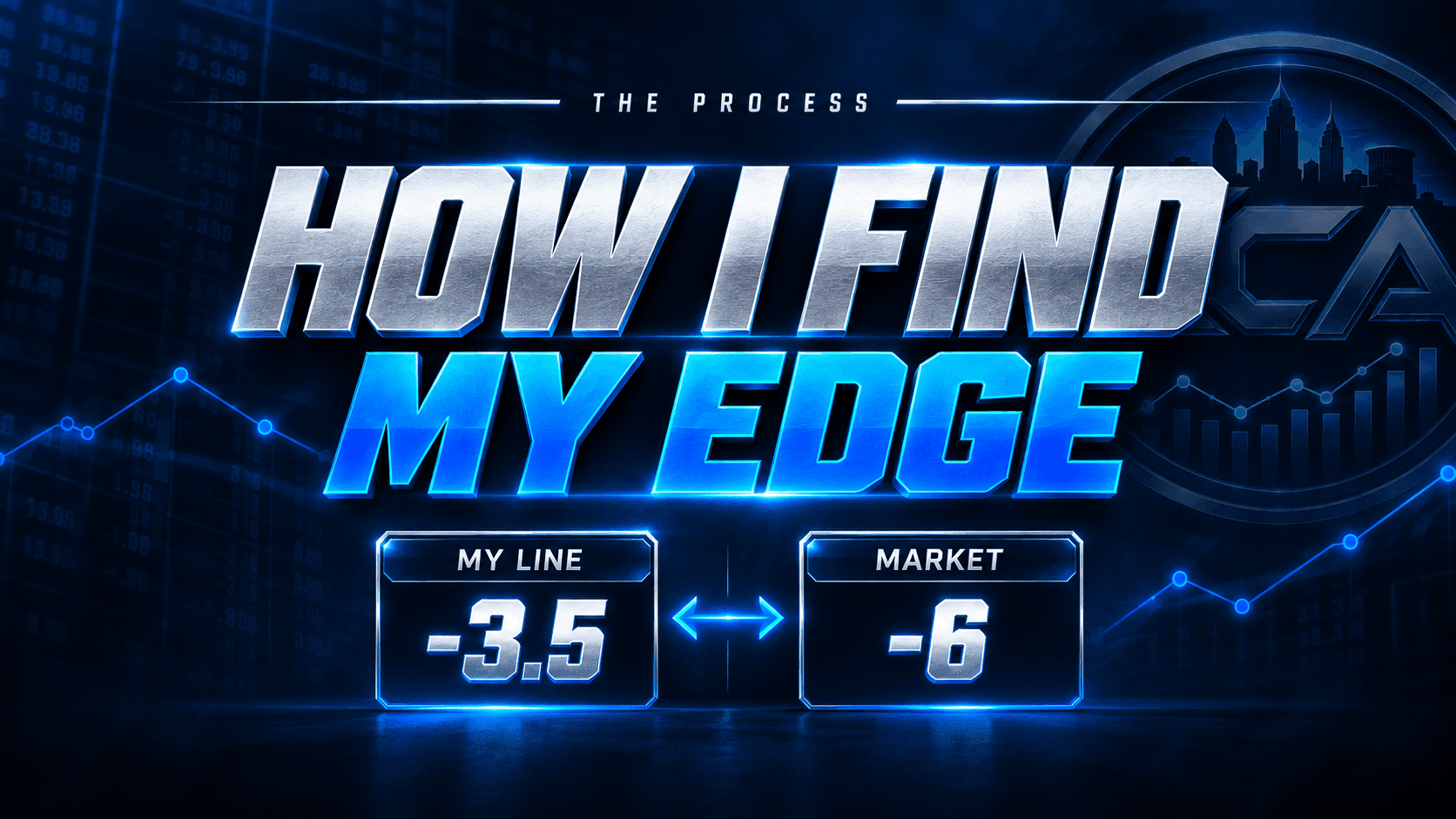
Every play I post comes from one of two places: an edge in the number, or a matchup the market has read wrong.
I set my own line first
Before I look at what the sportsbooks are offering, I produce my own spread and total for the game — my own estimate of how it should be priced. I maintain separate models for the WNBA, the NFL and college football. The three sports behave differently, and a model that treats them the same will be wrong in all three.
I compare my line with the market
Then I put my number beside the one the books are posting. When the difference between them is large enough to matter, the difference itself is the bet. That is the cleanest edge available: I am paid for the gap between my estimate and the market's, and the case does not need to be more complicated than that.
When the number shows nothing, I look for where the market has the matchup wrong
Often my number and the market agree. That does not mean there is no bet — it means I have to find it somewhere else.
The books are not ignoring matchups. Their lines already reflect how they expect two teams to play each other, and those lines are sharp. The question is not whether the matchup matters. It is whether their read on it holds up.
That is what I test. I work through the analytics on how both teams actually play, and I watch the film to see it for myself. I am looking for one specific thing: a place where the market's assumption does not match what the tape and the numbers show. A strength the line is treating as neutral. A weakness it has not discounted. A pace or tempo expectation built on games that looked nothing like this one.
When I find something like that and it is big enough to matter, that is a play the number alone would never have given me. When their read holds up, I pass — and that is the most common outcome.
Every play is posted, and every result is graded
However a play is found, I post it with the line, the odds and the stake in units, along with the reasoning behind it. Every result is graded, win or loss, and the full record is public.